
CBSE Class 10 Science Notes – Control and Coordination

1. Introduction
Control and coordination are the abilities of organisms to regulate and integrate various body functions to maintain homeostasis and respond to environmental changes. Control refers to the power of regulation, while coordination refers to the working together of different body parts to produce desired outcomes.
- To respond to environmental stimuli appropriately
- To maintain homeostasis (stable internal environment)
- To ensure different organs work together efficiently
- To avoid conflicts between different body processes
- To ensure survival through quick responses to danger
Nervous vs Hormonal Control
| Nervous Control | Hormonal Control |
|---|---|
| Electrical impulses (nerve signals) | Chemical messengers (hormones) |
| Fast transmission | Slow transmission |
| Short-lived effect | Long-lasting effect |
| Specific target organs | May affect multiple organs |
| Through neurons | Through bloodstream |
- Board Exam Weightage: 5-7 marks (Theory)
- High-scoring: Diagrams (neuron, reflex arc, brain), hormone functions
- Foundation for understanding human physiology
- NCERT Chapter 6: Control and Coordination (2024-25 Edition)
2. Chapter Overview
CBSE Class 10 Science Notes for this chapter cover:
- Nervous system in animals (neuron, CNS, PNS)
- Reflex action and reflex arc
- Human brain (forebrain, midbrain, hindbrain)
- Endocrine system and hormones
- Plant hormones and coordination
- Movements in plants (tropic and nastic)
3. CBSE Class 10 Science Notes – Nervous System
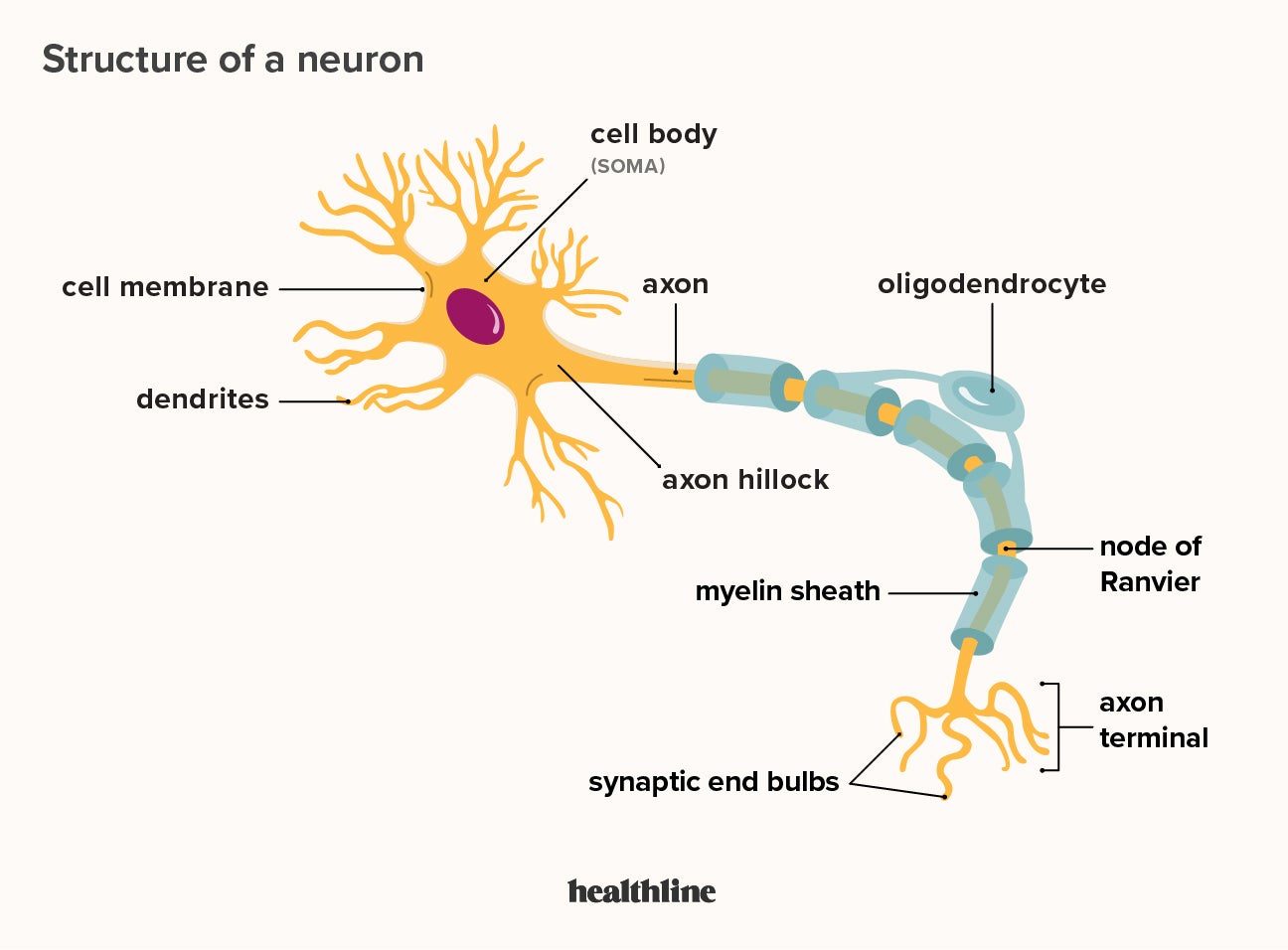
Structure of Neuron (Nerve Cell)
The neuron is the structural and functional unit of the nervous system. It consists of three main parts:
1. Cell Body (Cyton/Soma)
- Contains nucleus and cytoplasm
- Contains Nissl's granules (ribosomes for protein synthesis)
- Main metabolic center of the neuron
2. Dendrites
- Short, branched projections from cell body
- Receive impulses from receptors or other neurons
- Conduct impulses towards cell body
3. Axon
- Long, unbranched projection (until terminal)
- Conducts impulses away from cell body
- May be myelinated (covered with myelin sheath) for faster transmission
- Terminal branches have synaptic knobs that release neurotransmitters
Types of Neurons
| Type | Function | Location |
|---|---|---|
| Sensory (Afferent) | Carry impulses from receptors to CNS | From sense organs to spinal cord/brain |
| Motor (Efferent) | Carry impulses from CNS to effectors | From spinal cord/brain to muscles/glands |
| Relay (Interneuron) | Connect sensory and motor neurons | Within CNS |
Central Nervous System (CNS)
Consists of the brain and spinal cord. It is the main control center of the body.
Protection of CNS:
- Bony structures: Cranium (skull) protects brain; Vertebral column protects spinal cord
- Meninges: Three protective membranes (dura mater, arachnoid, pia mater)
- Cerebrospinal fluid (CSF): Shock-absorbing fluid between meninges
Peripheral Nervous System (PNS)
Consists of nerves arising from brain (cranial nerves - 12 pairs) and spinal cord (spinal nerves - 31 pairs).
Types of PNS:
- Somatic Nervous System: Controls voluntary actions
- Autonomic Nervous System: Controls involuntary actions
- Sympathetic: Prepares body for emergency (fight or flight)
- Parasympathetic: Calms body down (rest and digest)
Reflex Action and Reflex Arc
Reflex action: A sudden, involuntary, automatic response to a stimulus without conscious thought. It is the quickest way to respond to danger.
Examples:
- Pulling hand away from hot object
- Knee-jerk when tapped below knee cap
- Closing eyes when bright light flashes
- Sneezing and coughing
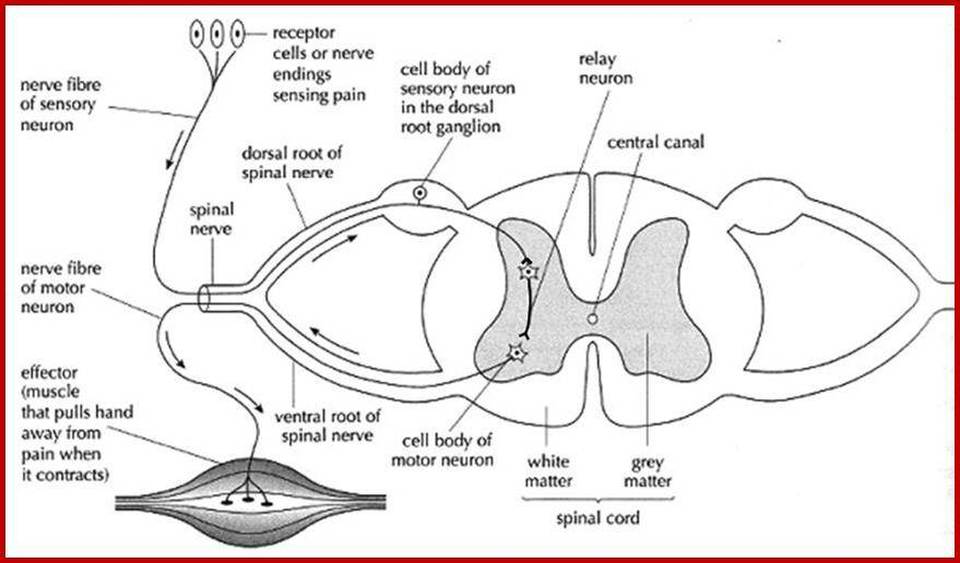
Components of Reflex Arc:
- Receptor: Detects stimulus (e.g., skin receptors)
- Sensory neuron: Carries impulse to spinal cord/CNS
- Relay neuron (Interneuron): Processes information in CNS
- Motor neuron: Carries impulse from CNS to effector
- Effector: Muscle or gland that responds
4. CBSE Class 10 Science Notes – Human Brain
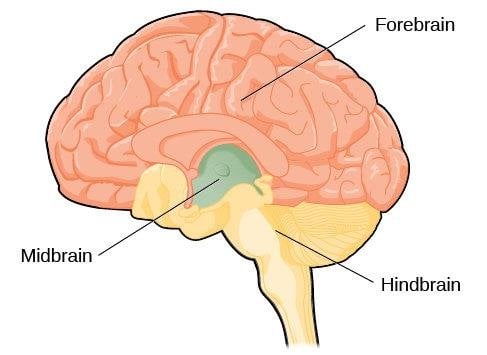
The brain is the main coordinating center of the body, protected inside the skull (cranium).
Forebrain (Prosencephalon)
Largest part of the brain, consists of:
Cerebrum
- Divided into two cerebral hemispheres
- Center of intelligence, memory, consciousness, thinking
- Controls voluntary movements
- Contains sensory areas (touch, temperature, pain) and motor areas
- Interprets information from sense organs
Hypothalamus
- Controls body temperature, hunger, thirst, fatigue, sleep, emotions
- Links nervous system to endocrine system (through pituitary gland)
- Controls secretion of pituitary hormones
Midbrain (Mesencephalon)
- Small region connecting forebrain and hindbrain
- Relays sensory information (vision, hearing) to cerebrum
- Controls reflex movements of eye muscles and neck
Hindbrain (Rhombencephalon)
Consists of three parts:
Cerebellum
- Second largest part of brain
- Maintains posture and balance of body
- Coordinates voluntary movements (precision and accuracy)
- Essential for learning motor skills (riding, swimming)
Pons
- Bridge between different parts of brain
- Contains respiratory center (regulates breathing)
- Relays signals between cerebrum and cerebellum
Medulla Oblongata
- Connects brain to spinal cord
- Controls involuntary actions:
- Heartbeat and blood pressure
- Breathing and swallowing
- Salivation, vomiting, sneezing
Forebrain = For thinking, feeling, sensory processing
Midbrain = Middleman, relay station
Hindbrain = Housekeeping (balance, breathing, heartbeat)
5. CBSE Class 10 Science Notes – Endocrine System
What are Hormones?
Hormones are chemical messengers secreted by endocrine glands directly into the bloodstream. They travel to target organs and regulate various physiological processes.
Characteristics of Hormones:
- Produced in one part, act on distant target organs
- Secreted in small quantities but have powerful effects
- Slow but long-lasting action
- Regulated by feedback mechanisms
Major Endocrine Glands and Their Hormones
1. Pituitary Gland (Master Gland)
Located at the base of brain, pea-sized, controls other endocrine glands.
| Hormone | Function |
|---|---|
| Growth Hormone (GH) | Stimulates growth and development of body |
| Thyroid Stimulating Hormone (TSH) | Stimulates thyroid gland |
| Adrenocorticotropic Hormone (ACTH) | Stimulates adrenal cortex |
| Follicle Stimulating Hormone (FSH) | Regulates growth and function of gonads |
| Luteinizing Hormone (LH) | Regulates growth and function of gonads |
| Oxytocin | Stimulates uterine contractions during childbirth |
| Vasopressin (ADH) | Reduces urine production, maintains water balance |
2. Thyroid Gland
Located in neck, butterfly-shaped, produces iodine-containing hormones.
| Hormone | Function |
|---|---|
| Thyroxine (T4) | Regulates metabolism, growth, and development |
| Triiodothyronine (T3) | Regulates metabolism, growth, and development |
| Calcitonin | Regulates calcium levels in blood |
- Goitre: Enlarged thyroid gland due to iodine deficiency
- Hypothyroidism: Reduced thyroxine production, causes fatigue, weight gain, slow heart rate
- Cretinism: Stunted growth and mental retardation in children due to hypothyroidism
Prevention: Use iodized salt in diet
3. Adrenal Glands
Located on top of kidneys, consist of adrenal cortex and adrenal medulla.
| Hormone | Function |
|---|---|
| Adrenaline (Epinephrine) | Emergency hormone - increases heart rate, blood pressure, glucose level; prepares body for fight or flight |
| Cortisol | Regulates metabolism, immune response, stress response |
4. Pancreas
Located behind stomach, has both exocrine (digestive enzymes) and endocrine functions.
| Hormone | Function |
|---|---|
| Insulin (from β-cells) | Lowers blood glucose level by converting glucose to glycogen |
| Glucagon (from α-cells) | Raises blood glucose level by converting glycogen to glucose |
5. Testes (Male Gonads)
- Located in scrotum
- Testosterone: Male sex hormone
- Development of male reproductive organs
- Secondary sexual characteristics (facial hair, deep voice, muscle development)
- Sperm production
6. Ovaries (Female Gonads)
- Located in pelvic region
- Oestrogen: Female sex hormone
- Development of female reproductive organs
- Secondary sexual characteristics (breast development, widening of hips)
- Regulation of menstrual cycle
- Progesterone: Maintains pregnancy, prepares uterus for implantation
6. CBSE Class 10 Science Notes – Coordination in Plants
Plants do not have nervous system or muscles, but they can still respond to stimuli through chemical coordination (plant hormones) and movements.
Movements in Plants
Tropic Movements (Directional)
Growth movements of plant parts in response to external stimuli. Direction of movement is related to direction of stimulus.
| Type | Stimulus | Response | Example |
|---|---|---|---|
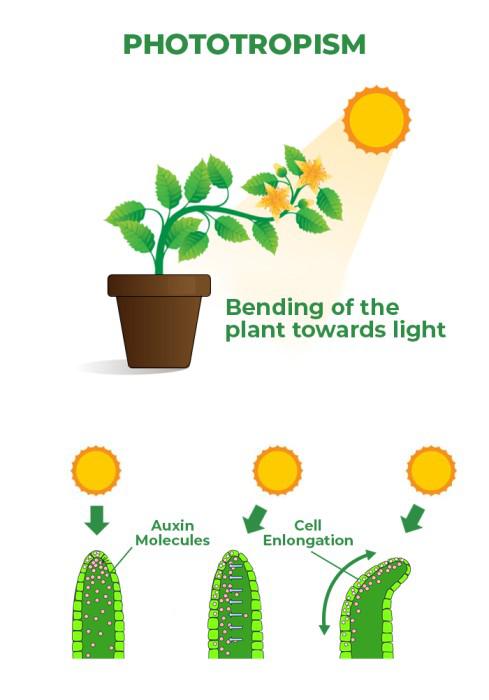
| Phototropism | Light | Shoot grows towards light; Roots grow away from light | Stem bending towards window |
| Geotropism | Gravity | Roots grow downwards (positive); Shoots grow upwards (negative) | Roots growing down, stem growing up |
| Hydrotropism | Water | Roots grow towards water | Roots growing towards moist soil |
| Chemotropism | Chemicals | Growth towards chemicals | Pollen tube growing towards ovule |
Nastic Movements (Non-directional)
Movements of plant parts that are not directed towards stimulus. These are usually reversible and occur due to changes in turgor pressure.
Examples:
- Thigmonasty: Touch-me-not (Mimosa pudica) leaves fold when touched
- Nyctinasty: Sleep movements - leaves of some plants fold at night
- Photonasty: Opening of flowers in light
Plant Hormones (Phytohormones)
Chemical substances produced in one part of plant and transported to another part to regulate growth and development.
| Hormone | Site of Production | Functions |
|---|---|---|
| Auxin | Shoot tip, root tip | Promotes cell elongation; Phototropism; Root formation; Prevents leaf fall |
| Gibberellin | Root tip, young leaves | Promotes stem elongation; Seed germination; Fruit development |
| Cytokinin | Root tip, developing fruits | Promotes cell division; Delay leaf aging; Organ formation in tissue culture |
| Ethylene | Ripe fruits, aging tissues | Promotes fruit ripening; Promotes leaf and flower fall (abscission) |
| Abscisic Acid (ABA) | Leaves, fruits, root cap | Inhibits growth; Promotes seed dormancy; Closes stomata during water stress |
Auxin = Always elongates (cell elongation)
Gibberellin = Grows stem (stem elongation)
Cytokinin = Cell division
Ethylene = Eats fruit (ripening)
Abscisic = Anti-growth (inhibitor)
7. Important Points (Quick Revision)
- Nervous Control: Fast, electrical, short-lived, specific target
- Hormonal Control: Slow, chemical, long-lasting, widespread
- Reflex Arc: Receptor → Sensory neuron → Relay neuron → Motor neuron → Effector
- Brain Parts: Forebrain (thinking), Midbrain (relay), Hindbrain (vital functions)
- Pituitary: Master gland, controls other glands
- Thyroid: Needs iodine; deficiency causes goitre
- Insulin: Lowers blood glucose; deficiency causes diabetes
- Adrenaline: Emergency hormone; fight or flight
- Tropic: Directional growth; Nastic: Non-directional movement
- Auxin: Phototropism; Ethylene: Fruit ripening
8. Solved Examples (CBSE Pattern)
Example 1: Reflex Arc Explanation (3 Marks)
Question: What is reflex action? Describe the path of reflex arc with a suitable example.
Reflex action: Sudden, involuntary, automatic response to a stimulus without conscious thought. It protects the body from damage.
Path of Reflex Arc (when touching hot object):
- Receptor: Temperature receptors in skin detect heat
- Sensory neuron: Carries impulse to spinal cord
- Relay neuron: Processes information in spinal cord
- Motor neuron: Carries impulse to muscle
- Effector: Arm muscle contracts, hand is withdrawn
Advantage: Response is immediate; brain is not involved, saving time.
Example 2: Brain Function Question (3 Marks)
Question: Name the part of brain responsible for:
a) Maintaining posture and balance
b) Controlling heartbeat and breathing
c) Thinking and memory
a) Cerebellum - Maintains posture, balance, and coordinates voluntary movements
b) Medulla oblongata - Controls involuntary actions like heartbeat, breathing, blood pressure
c) Cerebrum - Center of intelligence, thinking, memory, consciousness
Example 3: Hormone-Related Reasoning (3 Marks)
Question: Why is iodine necessary for proper functioning of thyroid gland? What happens if there is deficiency of iodine in diet?
Answer:
- Iodine is essential for synthesis of thyroxine hormone
- Thyroxine regulates metabolism, growth, and development
- Deficiency effects:
- Goitre - enlargement of thyroid gland
- Hypothyroidism - fatigue, weight gain, slow heart rate
- Cretinism in children - stunted growth, mental retardation
Prevention: Use iodized salt in diet
Example 4: 5-Mark Conceptual Question
Question: a) Compare nervous and hormonal control.
b) Name the hormones secreted by pancreas. Explain their functions and what happens if there is imbalance.
a) Comparison:
| Nervous Control | Hormonal Control |
|---|---|
| Electrical impulses | Chemical messengers |
| Fast transmission | Slow transmission |
| Short-lived effect | Long-lasting effect |
| Through neurons | Through bloodstream |
b) Pancreatic Hormones:
- Insulin (β-cells): Lowers blood glucose by converting glucose to glycogen
- Glucagon (α-cells): Raises blood glucose by converting glycogen to glucose
Imbalance: Deficiency of insulin causes diabetes mellitus - high blood glucose, frequent urination, excessive thirst, weight loss.
Example 5: Case-Study Based Question
Passage: A 45-year-old man was diagnosed with diabetes. His blood sugar levels were consistently high. The doctor prescribed insulin injections and advised dietary control.
Questions: a) Which gland is not functioning properly? b) Why are insulin injections necessary? c) Why can't insulin be given orally?
a) Pancreas is not functioning properly - specifically the β-cells that produce insulin.
b) Insulin injections are necessary because:
- Body is not producing sufficient insulin
- Insulin is required to convert glucose to glycogen
- Without insulin, blood glucose remains high, causing complications
c) Insulin cannot be given orally because:
- It is a protein hormone
- Digestive enzymes in stomach would digest it
- It would be destroyed before reaching bloodstream
9. Smart Tricks & Memory Aids
Forebrain = For thinking, Feeling, Future planning
Midbrain = Middleman, Messenger, Mediator
Hindbrain = Housekeeping (balance, breathing, heartbeat)
Or: "Fore-thinks, Mid-relays, Hind-maintains"
Receptor → Sensory → Relay → Motor → Effector
Remember: "RSRME" or "Really Smart Rabbits Make Eggs"
Pituitary (Master) → Thyroid (Metabolism) → Adrenal (Alert/Emergency) → Pancreas (Sugar control) → Gonads (Reproduction)
PTAPG - "Please Teach A Proper Game"
Auxin = Always grows towards light
Gibberellin = Grows tall (stem elongation)
Cytokinin = Creates cells (cell division)
Ethylene = Eats fruit (ripening)
Abscisic = Anti-growth, Abscission (falling)
- Always draw diagrams where asked (carry 30-40% marks)
- For reflex arc: Write 5 steps clearly
- For brain parts: Mention forebrain, midbrain, hindbrain separately
- For hormones: Write gland, hormone, function
- For plant movements: Distinguish tropic (directional) vs nastic (non-directional)
- Remember iodine-thyroxine and insulin-diabetes connections
10. Visual Learning – Diagrams

11. Most Important Board Questions
1 Mark Questions
2-3 Mark Questions
4-5 Mark Questions
12. Common Mistakes to Avoid
| Mistake | Correction |
|---|---|
| Confusing tropic and nastic movement | Tropic = directional growth; Nastic = non-directional movement |
| Mixing up brain functions | Cerebrum = thinking; Cerebellum = balance; Medulla = vital functions |
| Incomplete reflex arc explanation | Must include all 5 components: R-S-R-M-E |
| Confusing hormones with enzymes | Hormones are chemical messengers; Enzymes are biological catalysts |
| Wrong insulin function | Insulin LOWERS blood glucose (converts glucose to glycogen) |
13. Practice Section
Multiple Choice Questions (MCQs)
Q1. Which part of neuron carries impulse towards cell body?
- Axon
- Dendrite
- Synapse
- Myelin sheath
Q2. The emergency hormone that prepares body for fight or flight is:
- Insulin
- Thyroxine
- Adrenaline
- Growth hormone
Q3. Which hormone promotes fruit ripening?
- Auxin
- Gibberellin
- Cytokinin
- Ethylene
Assertion-Reason Question
Assertion (A): Reflex actions are involuntary.
Reason (R): Brain is not involved in reflex actions.
Answer: Both A and R are true but R is NOT the correct explanation of A.
Explanation: Reflex actions are involuntary because they occur without conscious thought. Brain may be involved in some reflexes, but the response occurs before brain processes it.
14. Frequently Asked Questions (FAQ)
15. Conclusion
Master Control and Coordination for Board Success!
These comprehensive CBSE Class 10 Notes for "Control and Coordination" cover all essential concepts, diagrams, and solved examples to help you excel in your board examinations.
Key Takeaways:
- Master neuron structure and reflex arc pathway
- Practice drawing brain and endocrine gland diagrams
- Remember functions of all brain parts (F-M-H)
- Know hormone functions and deficiency diseases
- Distinguish between tropic and nastic movements
Next Chapter: How do Organisms Reproduce – CBSE Class 10 Notes
Best of luck for your CBSE Class 10 Board Examinations!
These CBSE Class 10 Science Notes are prepared by experienced Biology faculty following the latest NCERT curriculum.