
CBSE Class 10 Science Notes – How do Organisms Reproduce
Chapter: 7 (How do Organisms Reproduce)
Board: CBSE Class 10
Subject: Science (Biology)
Marks Weightage: 6-8 marks in Board Exam

Introduction
CBSE Class 10 Notes for Biology Chapter 7 "How do Organisms Reproduce" cover essential concepts about reproduction mechanisms in living organisms. These CBSE Class 10 Science Notes are strictly aligned with the latest NCERT textbook and designed to help you score maximum marks in board examinations.
What is Reproduction? Reproduction is the biological process by which living organisms produce offspring of their own kind. Unlike other life processes (nutrition, respiration, excretion), reproduction is not essential for individual survival but is crucial for the continuity of species.
Importance of Reproduction:
- Ensures survival of species across generations
- Maintains genetic continuity
- Introduces variations essential for evolution
- Prevents extinction of organisms
Asexual vs Sexual Reproduction
| Feature | Asexual Reproduction | Sexual Reproduction |
|---|---|---|
| Number of Parents | One parent | Two parents (male & female) |
| Gametes | Not involved | Involved (fusion of gametes) |
| Genetic Variation | No variation (clones) | High variation |
| Speed | Rapid | Slow |
| Complexity | Simple | Complex |
| Examples | Amoeba, Hydra, Yeast | Humans, flowering plants |
CBSE Class 10 Science Notes – Asexual Reproduction
Asexual reproduction involves a single parent producing offspring without gamete formation. The offspring are genetically identical to the parent (clones).
Binary Fission
Organism: Amoeba, Paramecium, Leishmania
- Parent cell divides into two equal daughter cells
- Nucleus divides first (karyokinesis), followed by cytoplasm division (cytokinesis)
- In Amoeba: Division occurs in any plane
- In Leishmania: Division occurs in a definite orientation due to whip-like structure

Multiple Fission
Organism: Plasmodium (malarial parasite)
- Parent nucleus divides repeatedly into many nuclei
- Cytoplasm divides simultaneously
- Produces many daughter cells at once
- Occurs under unfavorable conditions
Budding
Organisms: Hydra, Yeast
- Small outgrowth (bud) develops on parent body
- Bud grows in size, develops nucleus and cytoplasm
- Mature bud detaches to form new individual
- In Yeast: Bud may form another bud (chain budding)

Fragmentation
Organism: Spirogyra
- Filament breaks into smaller fragments
- Each fragment grows into new individual
- Occurs due to mechanical damage or water currents
Regeneration
Organisms: Planaria, Hydra
- Ability to develop lost body parts
- Specialized cells proliferate to form mass of cells (blastema)
- Blastema differentiates into various tissues and organs
Spore Formation (Sporulation)
Organism: Rhizopus (bread mould)
- Thread-like structures called hyphae develop sporangia
- Sporangia contain thick-walled spores
- Spores are released and germinate on moist surfaces
- Thick walls protect spores during unfavorable conditions
Vegetative Propagation
Natural Methods:
- Roots: Sweet potato, dahlia, guava
- Stems: Ginger, turmeric, potato (tubers), onion (bulbs)
- Leaves: Bryophyllum (buds in notches), Begonia
Artificial Methods:
- Layering: Rose, jasmine, sugarcane
- Grafting: Mango, citrus, apple
- Tissue Culture: Growing plants from cells/tissues in nutrient medium
CBSE Class 10 Science Notes – Sexual Reproduction in Plants
Structure of Flower
Four Whorls (from outside to inside):
- Calyx: Green sepals, protective function
- Corolla: Colored petals, attract pollinators
- Androecium: Male reproductive part (stamen)
- Filament: Stalk
- Anther: Produces pollen grains (contain male gametes)
- Gynoecium/Pistil: Female reproductive part (carpel)
- Stigma: Sticky top, receives pollen
- Style: Elongated tube
- Ovary: Swollen base containing ovules (contain female gametes/egg cells)

Pollination
Definition: Transfer of pollen grains from anther to stigma
Types:
- Self-pollination: Same flower or different flower of same plant
- Cross-pollination: Different plant of same species (agents: wind, water, insects, birds)
Fertilization
Process:
- Pollen grain lands on stigma (germination)
- Pollen tube grows through style into ovary
- Pollen tube carries two male gametes
- Double Fertilization:
- One male gamete fuses with egg cell → Zygote (future embryo)
- Other male gamete fuses with polar nuclei → Endosperm (nutritive tissue)
Mathematical Representation of Chromosome Number:
If the parent cell has chromosome number $2n$:
- Gametes (Pollen/Ovule) have chromosome number $n$ (haploid)
- Zygote has chromosome number $2n$ (diploid)
- Endosperm has chromosome number $3n$ (triploid)
$$ \text{Zygote} = n + n = 2n $$
$$ \text{Endosperm} = n + n + n = 3n $$
CBSE Class 10 Science Notes – Sexual Reproduction in Humans
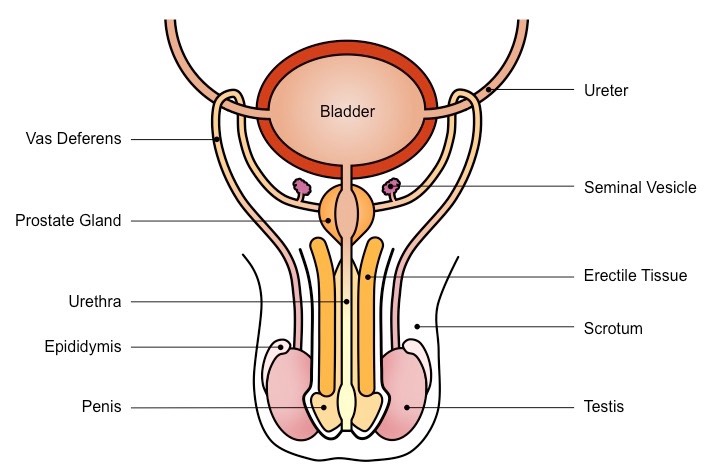
Male Reproductive System
Primary Sex Organs:
- Testes (Pair): Located in scrotum (outside abdominal cavity)
- Produce sperms (male gametes)
- Secrete testosterone (male hormone)
- Lower temperature required for sperm production
Accessory Organs:
- Vas deferens: Transport sperms from testes
- Seminal vesicles: Add nutritive fluid
- Prostate gland: Adds alkaline fluid (neutralizes vaginal acidity)
- Urethra: Common passage for urine and semen
- Penis: Copulatory organ
Female Reproductive System
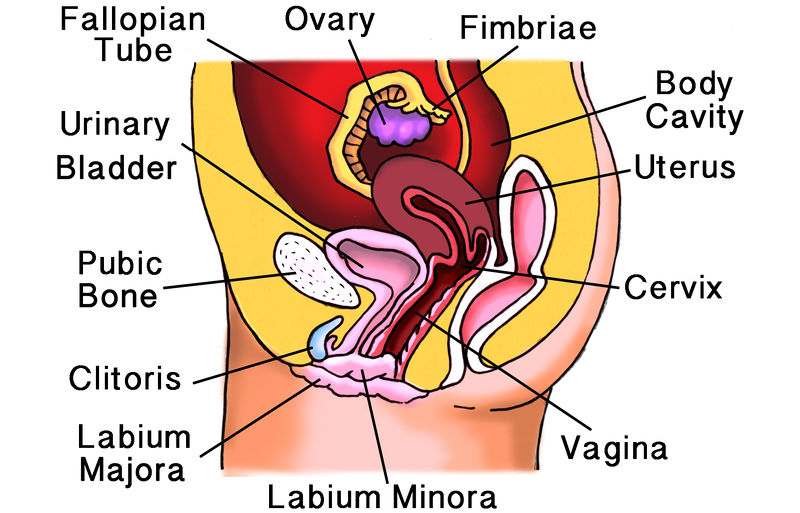
Primary Sex Organs:
- Ovaries (Pair): Located in abdominal cavity
- Produce ova/eggs (female gametes)
- Secrete estrogen and progesterone
- One egg produced per month (alternating ovaries)
Accessory Organs:
- Fallopian tubes (Oviducts): Site of fertilization, transport egg to uterus
- Uterus (Womb): Pear-shaped organ where embryo develops
- Cervix: Opening between uterus and vagina
- Vagina: Birth canal, receives penis during copulation
Fertilization and Development
- Sperms enter through vagina → travel to fallopian tube
- Fertilization: Fusion of sperm and egg → Zygote
- Zygote divides to form embryo
- Embryo implants in uterine lining
- Placenta: Special tissue connecting mother and embryo
- Provides nutrition and oxygen
- Removes waste products
- Gestation period: ~9 months
- Birth through rhythmic uterine contractions
Menstrual Cycle
Duration: 28 days (approximate)
Phases:
- Menstrual phase (Days 1-5): Uterine lining sheds (bleeding)
- Follicular phase (Days 6-14): Egg matures, uterine lining rebuilds
- Ovulation (Day 14): Mature egg released from ovary
- Luteal phase (Days 15-28): Uterine lining thickens for implantation; if no fertilization, cycle repeats
Menarche: First menstruation (age 10-14 years)
Menopause: Cessation of menstruation (age 45-50 years)
Puberty and Secondary Sexual Characters
Male Changes:
- Growth of facial and body hair
- Deepening of voice
- Increase in height and muscle mass
- Development of sex organs
- Production of sperms
Female Changes:
- Breast development
- Widening of hips
- Growth of pubic and underarm hair
- Beginning of menstrual cycle
- Maturation of reproductive organs
Important Comparison Tables
Asexual vs Sexual Reproduction
| Characteristic | Asexual Reproduction | Sexual Reproduction |
|---|---|---|
| Parents involved | Single parent | Two parents |
| Gametes | Absent | Present (sperm & egg) |
| Fertilization | Does not occur | Occurs |
| Genetic makeup | Identical to parent | Variation present |
| Speed | Fast | Slow |
Binary vs Multiple Fission
| Feature | Binary Fission | Multiple Fission |
|---|---|---|
| Number of daughter cells | 2 | Many (numerous) |
| Nuclear divisions | One | Repeated |
| Examples | Amoeba, Paramecium | Plasmodium |
Pollination vs Fertilization
| Pollination | Fertilization |
|---|---|
| Transfer of pollen to stigma | Fusion of male & female gametes |
| External process | Internal process (inside ovule) |
| No zygote formation | Zygote formed |
Menstrual Cycle Stages
| Phase | Days | Key Events |
|---|---|---|
| Menstruation | 1-5 | Shedding of uterine lining |
| Follicular | 6-14 | Egg maturation, estrogen secretion |
| Ovulation | 14 | Egg release from ovary |
| Luteal | 15-28 | Progesterone secretion, lining thickening |
Most Important Board Questions
Asexual Reproduction: Involves only one parent, no gamete formation, offspring are clones (genetically identical), examples: Binary fission in Amoeba, budding in Hydra.
Sexual Reproduction: Involves two parents, requires gamete formation and fertilization, offspring show genetic variation, examples: Humans, flowering plants.
- Testis (sperm production)
- Vas deferens (sperm transport)
- Seminal vesicle (nutritive fluid)
- Prostate gland (alkaline fluid)
- Urethra (common passage)
- Penis (copulatory organ)
- Pollen grain lands on stigma and germinates
- Pollen tube grows through style carrying two male gametes
- Double fertilization occurs:
- One male gamete ($n$) + Egg cell ($n$) → Zygote ($2n$)
- Other male gamete ($n$) + Polar nuclei ($2n$) → Endosperm ($3n$)
Menstrual Phase (Days 1-5): Uterine lining breaks down and is discharged.
Follicular Phase (Days 6-14): Egg matures in ovary; estrogen rebuilds uterine lining.
Ovulation (Day 14): Mature egg released from ovary.
Luteal Phase (Days 15-28): Progesterone maintains lining; if no fertilization, cycle restarts.
(a) Identify the organism [1 Mark]
(b) Name the mode of reproduction [1 Mark]
(c) Explain the process [2 Marks]
(a) Spirogyra (identified by spiral chloroplasts)
(b) Fragmentation
(c) The filament breaks into fragments due to mechanical stress. Each fragment contains cells with genetic material and grows into a new filament under favorable conditions.
Common Mistakes to Avoid
- Confusing pollination & fertilization: Pollination is transfer of pollen (physical); fertilization is fusion of gametes (biological)
- Regeneration vs Reproduction: Regeneration is repair, not primary reproduction
- Menstrual cycle: Menstruation is the shedding phase, not the entire cycle
- Fertilization site: Humans: Fallopian tube (NOT uterus); Plants: Inside ovule (NOT on stigma)
- Binary vs Multiple fission: Binary = 2 cells; Multiple = many cells
- Incomplete diagram labelling: Always label all parts with proper spelling
Smart Tricks for Memory
Male Organs: TV-PSU (Testes, Vas deferens, Prostate, Seminal vesicle, Urethra)
Female Organs: O-F-U-V (Ovary, Fallopian tube, Uterus, Vagina)
Menstrual Cycle: M-F-O-L (Menstruation, Follicular, Ovulation, Luteal)
FAQ Section
What is binary fission?
Binary fission is an asexual reproduction method where a parent cell divides into two equal daughter cells. It occurs in unicellular organisms like Amoeba and Paramecium. The nucleus divides first, followed by cytoplasmic division.
What is pollination?
Pollination is the transfer of pollen grains from the anther (male part) to the stigma (female part) of a flower. It can be self-pollination (same flower) or cross-pollination (different flower), aided by wind, water, or animals.
What is menstrual cycle?
The menstrual cycle is a monthly series of changes in the female reproductive system (approx. 28 days) involving egg maturation, release, and uterine lining preparation. If fertilization doesn't occur, the lining sheds as menstruation.
Are these CBSE Class 10 Science Notes based on NCERT?
Yes, these CBSE Class 10 Science Notes are 100% aligned with the latest NCERT textbook for Class 10 Science Chapter 7. All concepts, definitions, and diagrams follow NCERT standards and are exam-oriented for CBSE board examinations.
What is the marks weightage of Chapter 7 in CBSE Class 10 Board Exam?
Chapter 7 "How do Organisms Reproduce" carries approximately 6-8 marks in the CBSE Class 10 Science board exam, including MCQs, short answer questions (2-3 marks), and long answer questions (5 marks).
Conclusion
Mastering CBSE Class 10 Science Notes for Chapter 7 requires understanding both theoretical concepts and diagram practice. Focus on the differences between asexual and sexual reproduction, detailed processes in plants and humans, and accurate diagram labelling.
- Revise all definitions daily
- Practice diagrams 3 times each
- Solve previous year questions (2015-2024)
- Focus on starred important questions
Tags: CBSE Class 10 Notes, CBSE Class 10 Science Notes, Class 10 Science Chapter 7 Notes, How do Organisms Reproduce Class 10, Asexual Reproduction Class 10, Sexual Reproduction in Humans Class 10, Human Reproductive System Diagram Class 10, NCERT Class 10 Science Notes, Class 10 Science Notes PDF